For freight carriers and brokers running the show themselves

What's Really Capping Your Freight Business?

Leo gives freight carriers and brokers an always-on AI operator that handles the work that should not have to wait for you. Calls covered. Emails drafted. Follow-ups surfaced. Company context remembered. Generic AI knows freight the way a search engine does. Leo knows your freight the way someone who's actually run it does. Built from real freight operating experience, then tuned to your lanes, your customers, and the way you actually run.

Empty flatbed on a Midwest industrial highway - the freight is there

Generic AI Is a Productivity Tool. Leo Is Your Operator.

"I need a driver Chicago to Dallas, about 42,000 pounds. Pick up Thursday, deliver Friday. What can you do for it?"

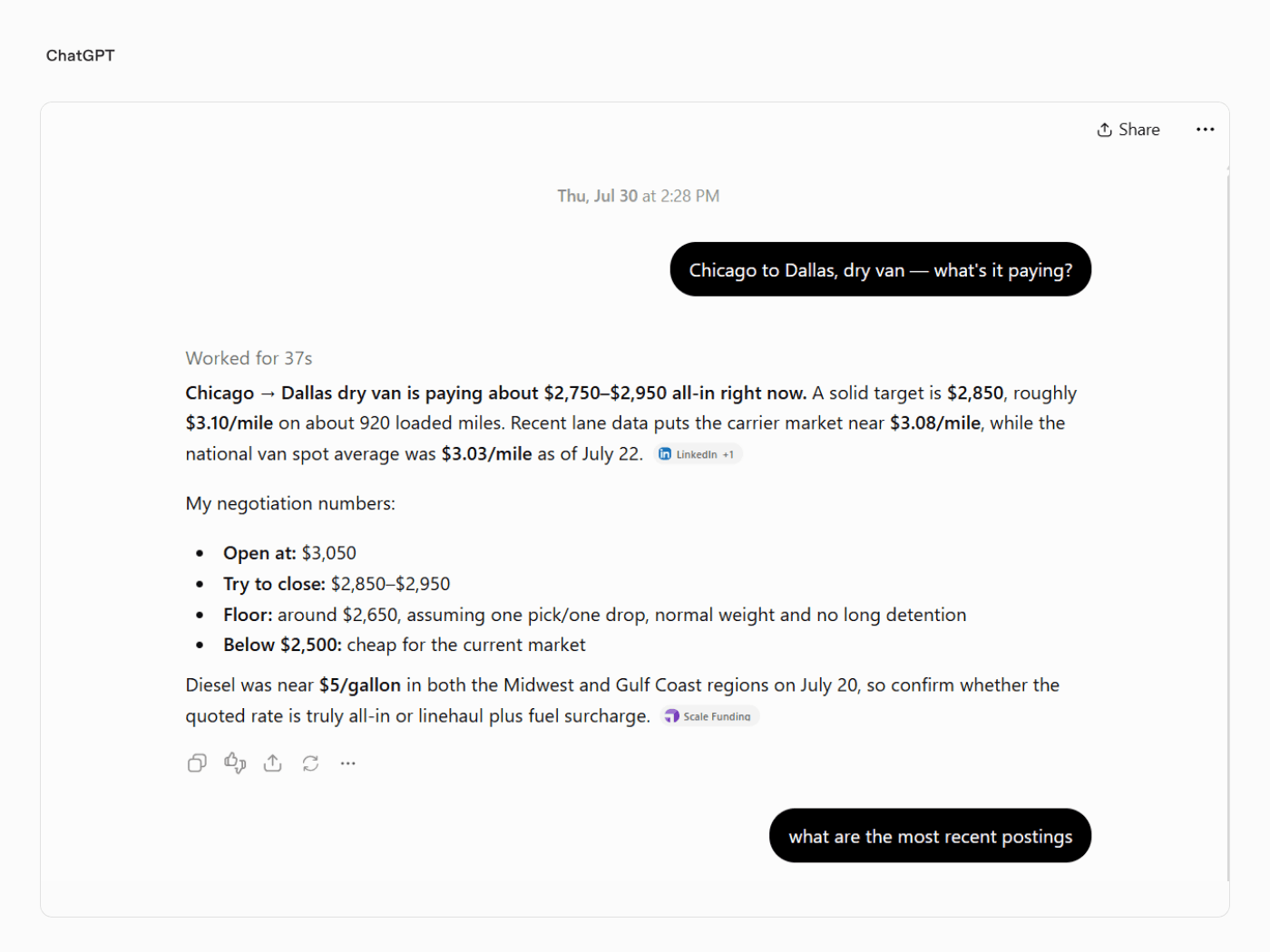
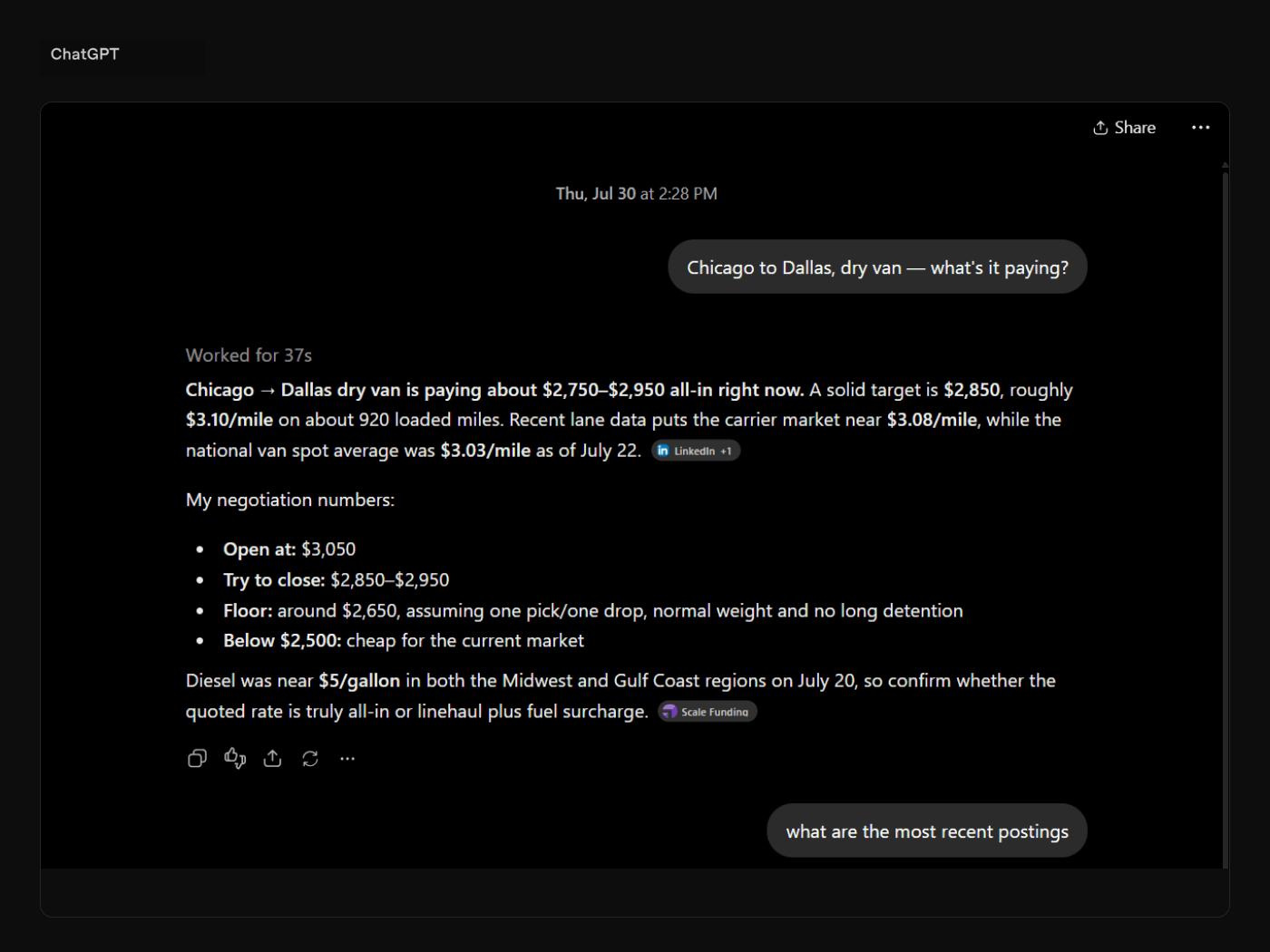
Generic AI: "I'm an AI assistant. I'm not a carrier or broker, so I can't actually quote or book this load. I'd recommend posting it on a load board and calling around to a few brokers. You're typically looking at somewhere around $2 to $2.80 a mile."

Leo: "Before I give you a number, Chicago to Dallas is about 926 miles for a solo driver. That's a Saturday delivery, not a Friday. If Friday's the deadline, you'd need a team. A few quick questions before I quote: what's the commodity, the exact pickup and delivery zips, any required appointments, and dock hours? Once I have those, I'll get you a real number. What are we hauling?"

Generic AI shrugged and told the shipper to go do its own job.

Leo caught a scheduling problem the shipper didn't even know it had, then asked the questions someone who's actually run freight asks before quoting. That's not a chatbot with a faster keyboard. That's the difference between a tool that answers questions and an operator that works the load.

You Don't Have a Discipline Problem. You Have a Structural Problem.

The math was never in your favor.

Ask most operators what's capping their growth and they'll say trucks, or lanes, or leads. Add a truck. Add an account. The business should grow.

Then it does, and somehow you're more behind than before, not less. More calls to answer. More quotes to draft. More customers to remember. Growth didn't loosen the ceiling. It lowered it.

That's because the ceiling was never equipment, freight, or accounts. It was always the size of one person's attention. A truck doesn't answer its own phone. A lane doesn't draft its own follow-up email. Every mile you add just funnels more back through the same one person, at the same twenty-four hours a day you had before you grew.

You don't have a discipline problem. You have a structural problem. The business can only move as fast as you can answer, quote, follow up, remember, and respond. That's not a personal failure. That's the ceiling of being one human. No planner was going to fix it. There isn't an app for "be in two places at once."

We call it the Operator Trap. It's the reason Leo exists.

Off the Clock, Leo's Still on Duty.

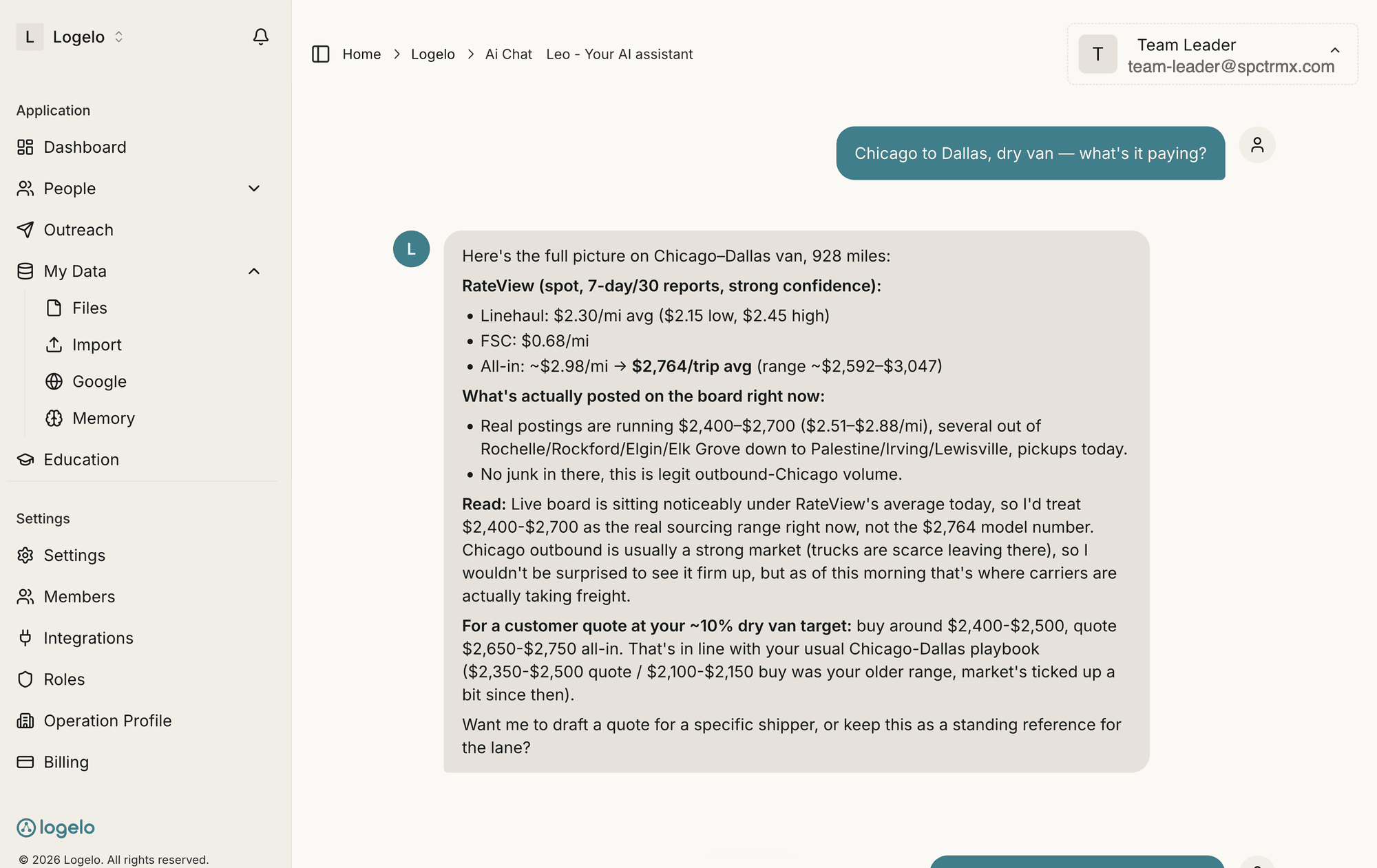
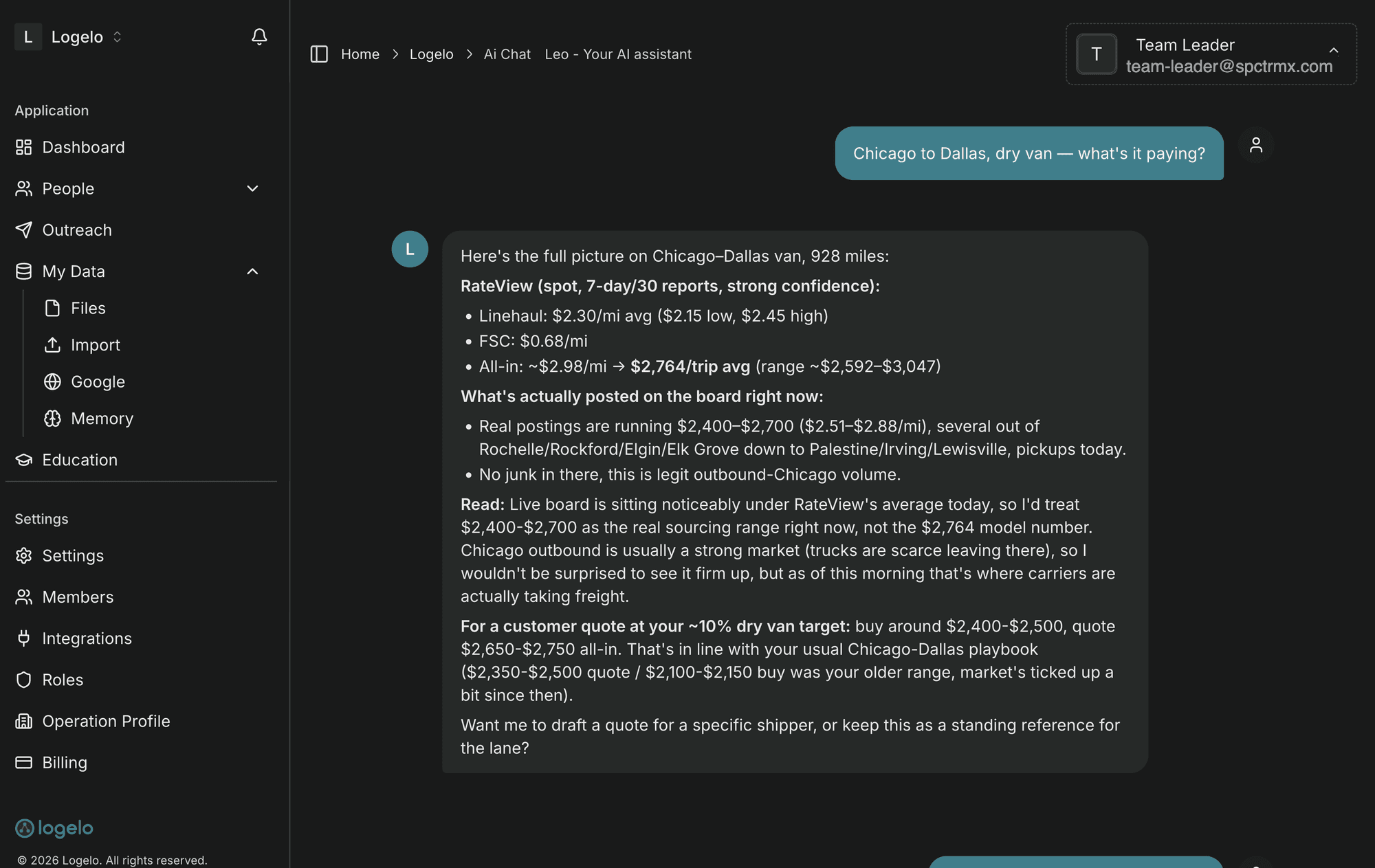
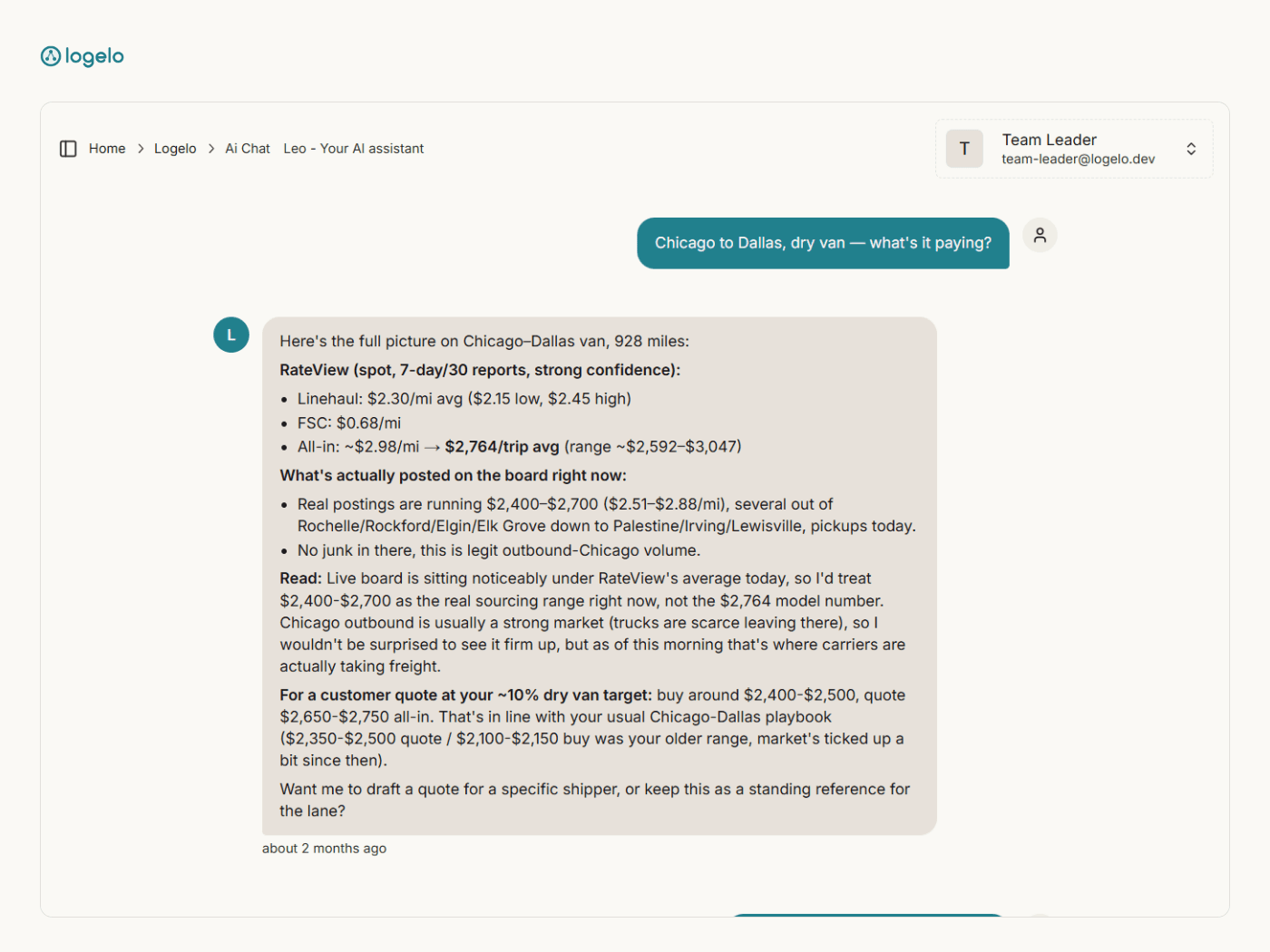
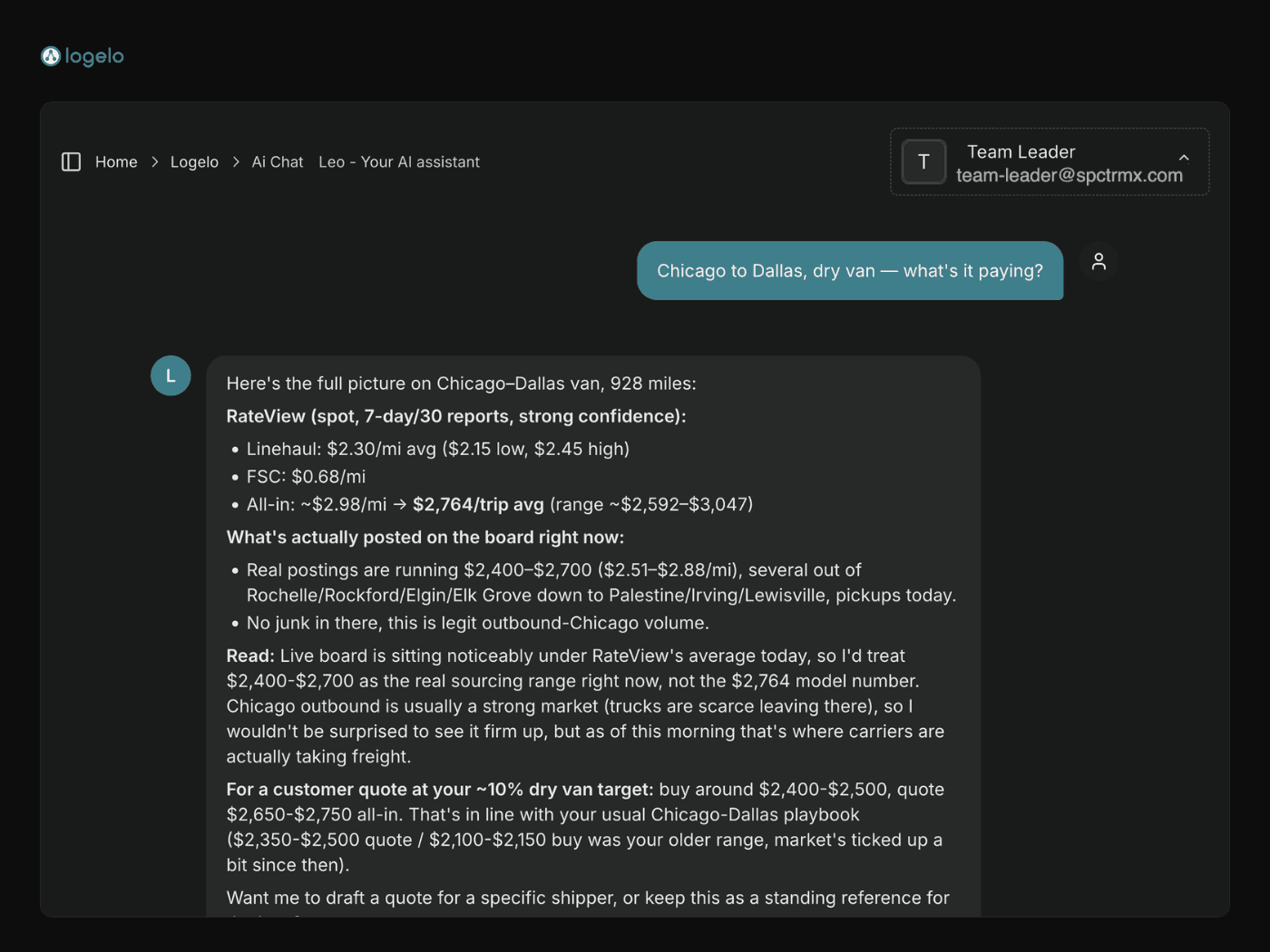
You get busy. Leo gets to work. While you're on another call, on the road, or asleep, Leo is already working. Here's what that looks like day to day, at every tier: Shown: demonstration interface with sample data.

Drafts your communication.
Leo drafts emails, replies, and follow-ups in your voice, so the inbox that's been piling up starts moving again.
Surfaces what needs you.
Leo sorts what's routine from what needs a real decision, so you're not digging through everything to find the one thing that matters.
Remembers your business.
Every lane, every customer, every rule you tell Leo once, Leo keeps. It doesn't start over the next time you open it.
Connects to what you already use.
Leo works inside the tools you already run your operation with. Nothing to replace, nothing to migrate.
App screenshot

You get busy. Leo gets to work.

Every operator gets Leo's drafting, memory, and follow-up coverage from day one. Want Leo answering the phone too? Leo Plus adds light inbound voice during business hours. Leo Voice adds full after-hours coverage with a dedicated number. Leo Core stays text and email only, by design, so you always know exactly what each level covers.

Image

Built From Inside Freight, Proven in Production

Logelo was built from inside freight. Before Leo existed, we ran the experiment on our own operation: years of hands-on freight (load boards, broker authority, carrier compliance, dispatch, rate negotiation) combined with decades of internet lead generation, online sales, paid media, and applied AI. Run together on a working brokerage, that combination grew the business and carried it through to a sale. Leo is what we kept: the freight judgment and the systems that worked, encoded into an operator, not bolted onto a general AI model that's never quoted a load in its life. Everything below is running in production, not on a slide deck.

We're documenting that before-and-after as a full case study. The short version is above. The long version is a conversation.

Multi-tenant infrastructure with per-account data isolation, so one operator's business context never mixes with another's.

Live rate and lane lookups through a direct load board data integration.

Voice infrastructure built and running in production, used at the Plus and Voice tiers.

Usage governance built in from day one, so the product stays reliable as accounts and activity scale.

Here's Everything Leo Covers

Drafting. Memory. Follow-ups. Company IQ. And when you're ready, Leo can pick up the phone too.

Leo drafts your emails and follow-ups in your voice, so the inbox that's been piling up starts moving again. Leo sorts what's routine from what needs a real decision, so you're not digging through everything to find the one thing that matters. And every lane, every customer, every rule you tell Leo once, Leo keeps. That's Company IQ: your operation's second brain, getting sharper every month you use it.

Some operators want Leo on the phone too. Leo Plus adds light inbound voice during business hours. Leo Voice adds full after-hours coverage with a dedicated number. Leo Core has no voice, by design, so you always know exactly what you're getting.

No CRM to replace. No TMS to replace. Just an operator that covers the work you don't have time for.

What You'd Have to Hire to Do What Leo Does

Hiring is expensive. AI is not.

To cover what Leo covers using people, you're not looking at one hire.

What Leo covers would normally take a sales coordinator, an organized inbox, a follow-up system, and someone who remembers every customer's history. That's work scattered across three or four roles most operations can't afford to hire separately. Leo compresses all of it into one freight operator.

Generic AI mostly helps you type faster. That's it. That's the whole pitch. Leo actually does the job. AI changed what's possible here. We didn't build another app for you to check. We built the operator you couldn't realistically hire as a full team.

Your Second Brain. It Never Forgets.

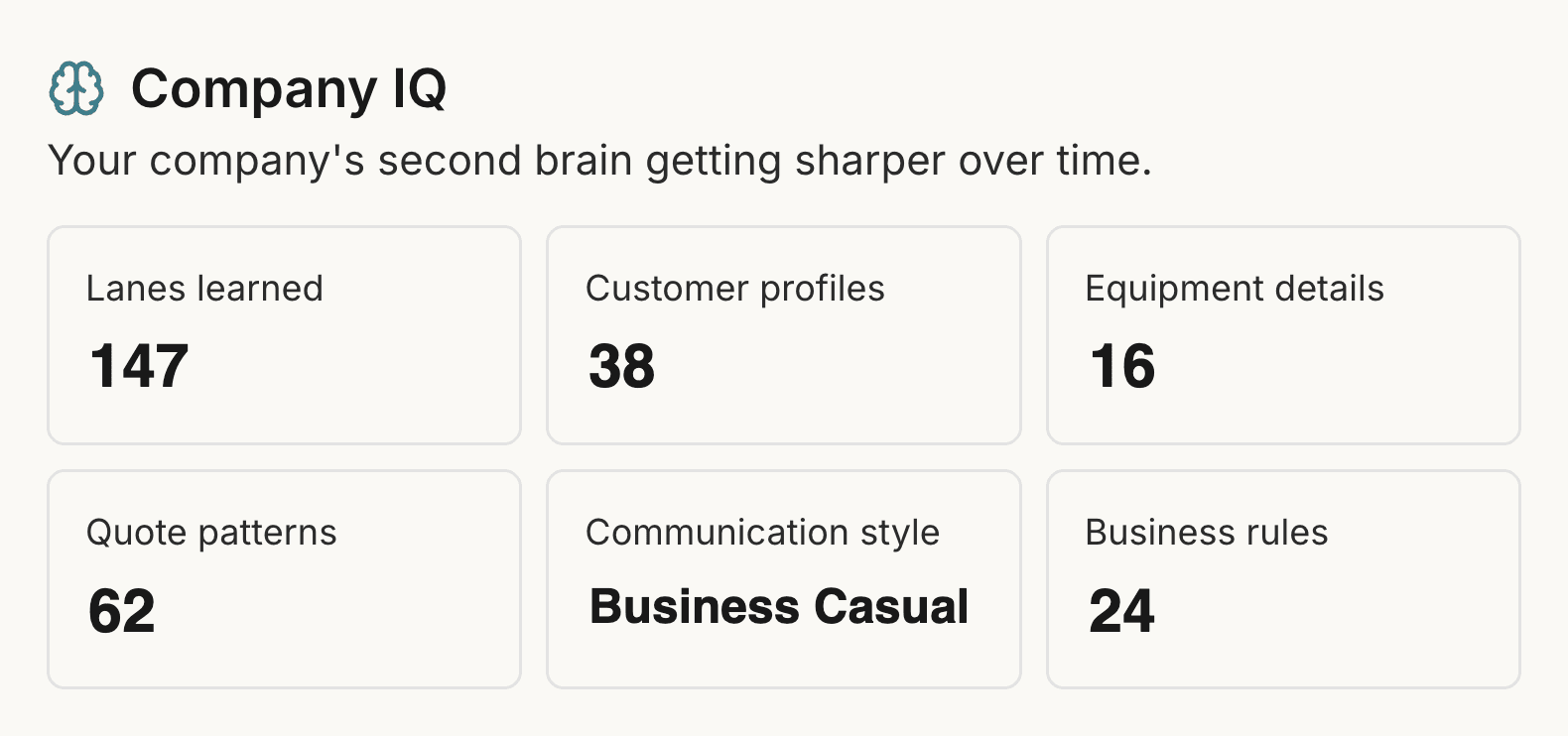
Every month you use Leo, it learns more about your operation: which lanes you run, which customers need what, which rules you follow without thinking about them. Generic AI resets every conversation. Leo doesn't. This is your Company Second Brain, and it only gets sharper. Sample Company IQ view using demonstration data.

Lanes learned
47
Customer profiles
12
Equipment details
8
Business rules
16

See What's Really Capping Your Growth

Two scorecards, same diagnostic, different door. No pitch. No pressure. Free either way.

Logelo LLC · 53150 Fairchild Rd, Chesterfield, MI 48051 · 313-350-5654 · connect@logelo.com